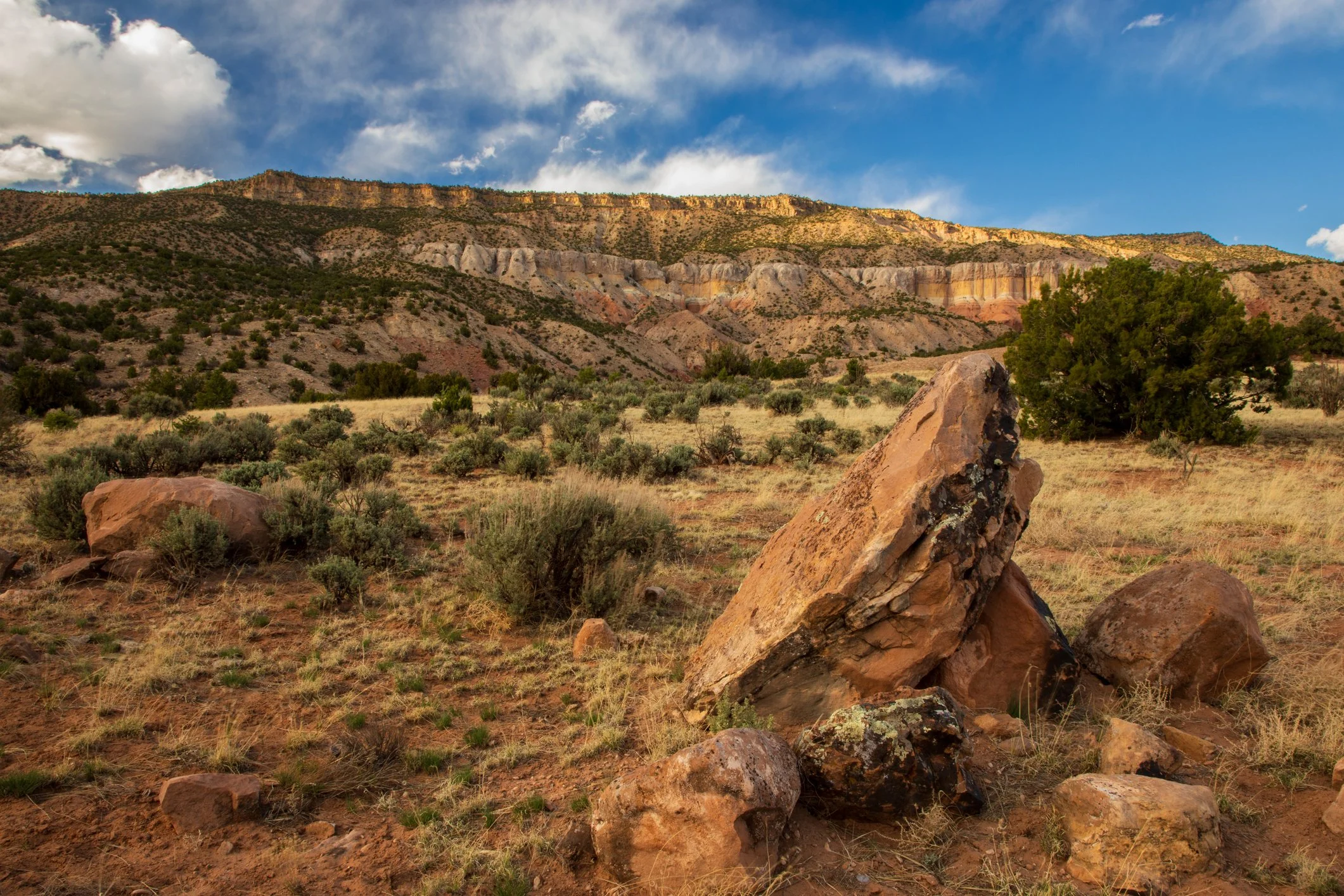
Northern New Mexico has a particular kind of beauty. There are the Sangre de Cristos outside Santa Fe, the cottonwoods along the Rio Grande, the high desert around Albuquerque, the mountains and forests north toward Taos and Chama. There is extraordinary light here, enormous skies, and a sense of physical space that can be difficult to find elsewhere.
But living here may not always feel as idyllic as the landscape suggests.
For some people, the very things that make New Mexico appealing can also contribute to a sense of isolation. You can live in Santa Fe and have a full calendar while still feeling that you don't quite belong. You can spend a Saturday hiking in the mountains and come home to an apartment that feels strangely quiet. You can move here hoping for a fresh start and discover that the same anxiety, loneliness, relationship patterns, or unresolved grief came with you.
Distance matters, too. In much of northern New Mexico, a thirty- or sixty-minute drive to see a doctor, therapist, or friend isn't unusual. Outside Santa Fe and Albuquerque, mental health resources can become considerably harder to find. Rural and remote communities face particular barriers to behavioral healthcare, including shortages of providers and geographic isolation.
There are also the less visible pressures of life here: the difficulty of finding affordable housing, seasonal work and economic uncertainty, family members living far apart, and the complicated experience of living in a place shaped by many overlapping histories, cultures, and communities.
And then there is the New Mexico paradox: there can be a lot of room here, but not always a lot of connection.
That is one reason I think therapy can be particularly meaningful in this part of the country.
Therapy offers a place to step out of the pace and distractions of everyday life and pay attention to what is happening underneath them. It can be a place to explore loneliness, anxiety, depression, relationships, grief, identity, or the feeling that you have somehow become disconnected from the life you intended to live.
For someone who has moved to Santa Fe looking for a different kind of life, therapy can also become part of the process of putting down roots—not simply finding a place to live, but figuring out what it means to belong.
New Mexico gives us plenty of space to look outward. Sometimes therapy gives us a place to look inward, with another person alongside us.
And sometimes that is where a different kind of connection begins.